
I have a history
The origins
Cesi, for its geographical position, for the rich vegetation, for the presence of a rich fauna fundamental for hunting and, therefore, for survival, for the presence of caves cavities useful to the defense and to repair itself, was inhabited since the prehistoric period, as evidenced by some finds found in the caves themselves.
The Umbrians
The Umbrian populations, considered among the most ancient peoples in Italy, inhabited the mountain of Cesi leaving remarkable testimonies: in addition to the necropolis of Porta Palazzo and Poggio Azzuano - continuation of the great necropolis of Pentima, the Acciaierie and San Pietro in Campo There are the cyclopic walls of the road of the Painting, of Sant'Erasmo (where is the site of the ancient Clusiulum, a fortified place)
Remains of great interest are mainly two mountain temples Torre Maggiore.
The remains of these settlements clearly indicate that the area was among the most powerful settlement centres of the southern Umbrian peoples.
The materials found, mostly votive bronzes, are visible at the Archaeological Museum of Terni.
Romans
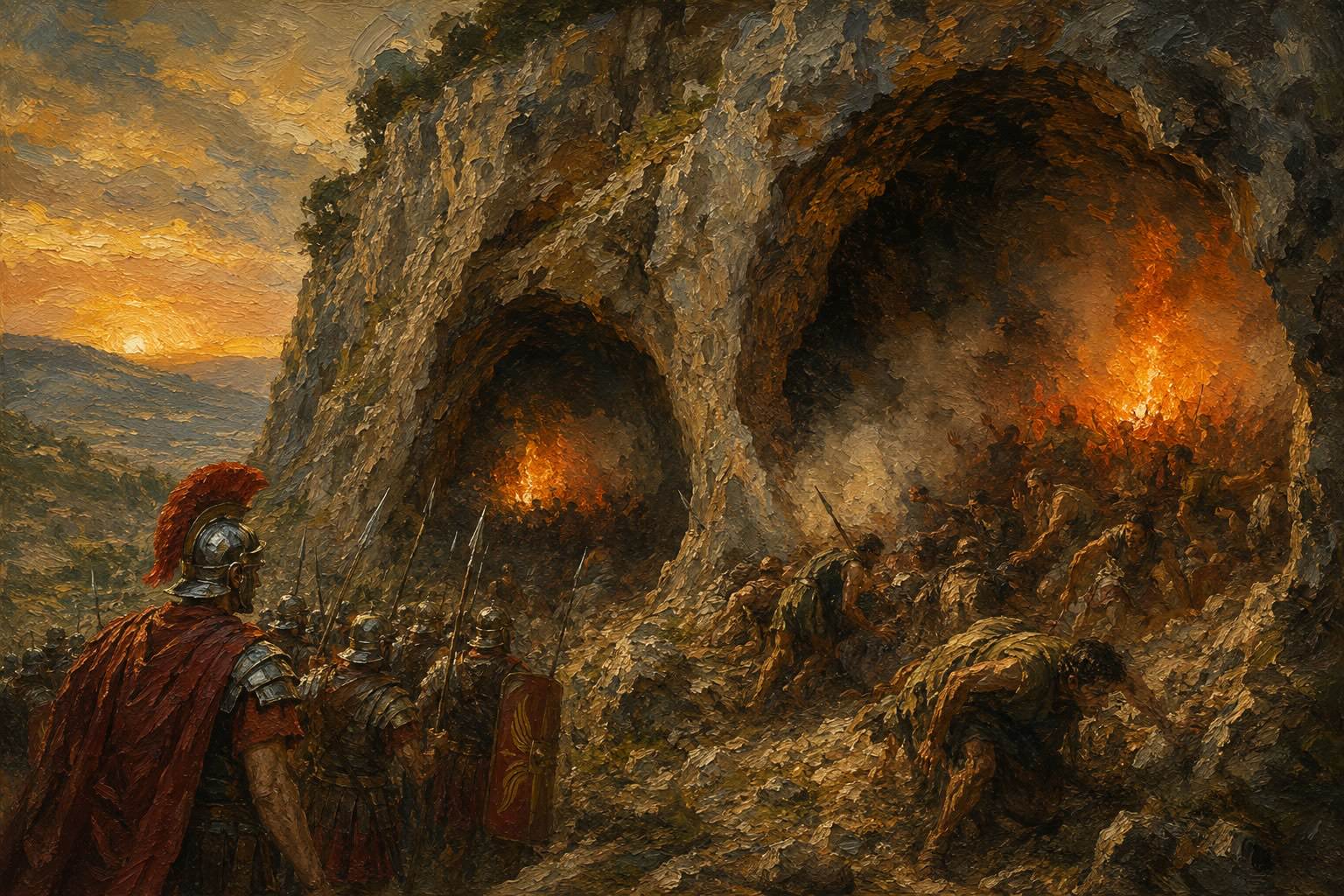
In 295 BC. with the battle of Sentino, Rome defeated the Umbrian populations. The fortified site of Cesi and Sant'Erasmo, did not prevent the Romans from submitting the population that inhabited the territory, which was forced to take refuge on the place where Carsulae was born. The last resistance of Umbrian warriors, then ended in massacre, was probably, as Tito Livio recalls in the X book, head of Stories, in the caves of Cesi.
What is certain is that at the beginning of the 3rd century BC, Rome completed the conquest of Umbria and the Martani mountains represented the last bastion of the resistance of the Umbrians, engaged in a kind of guerrilla against the most organized Romans.
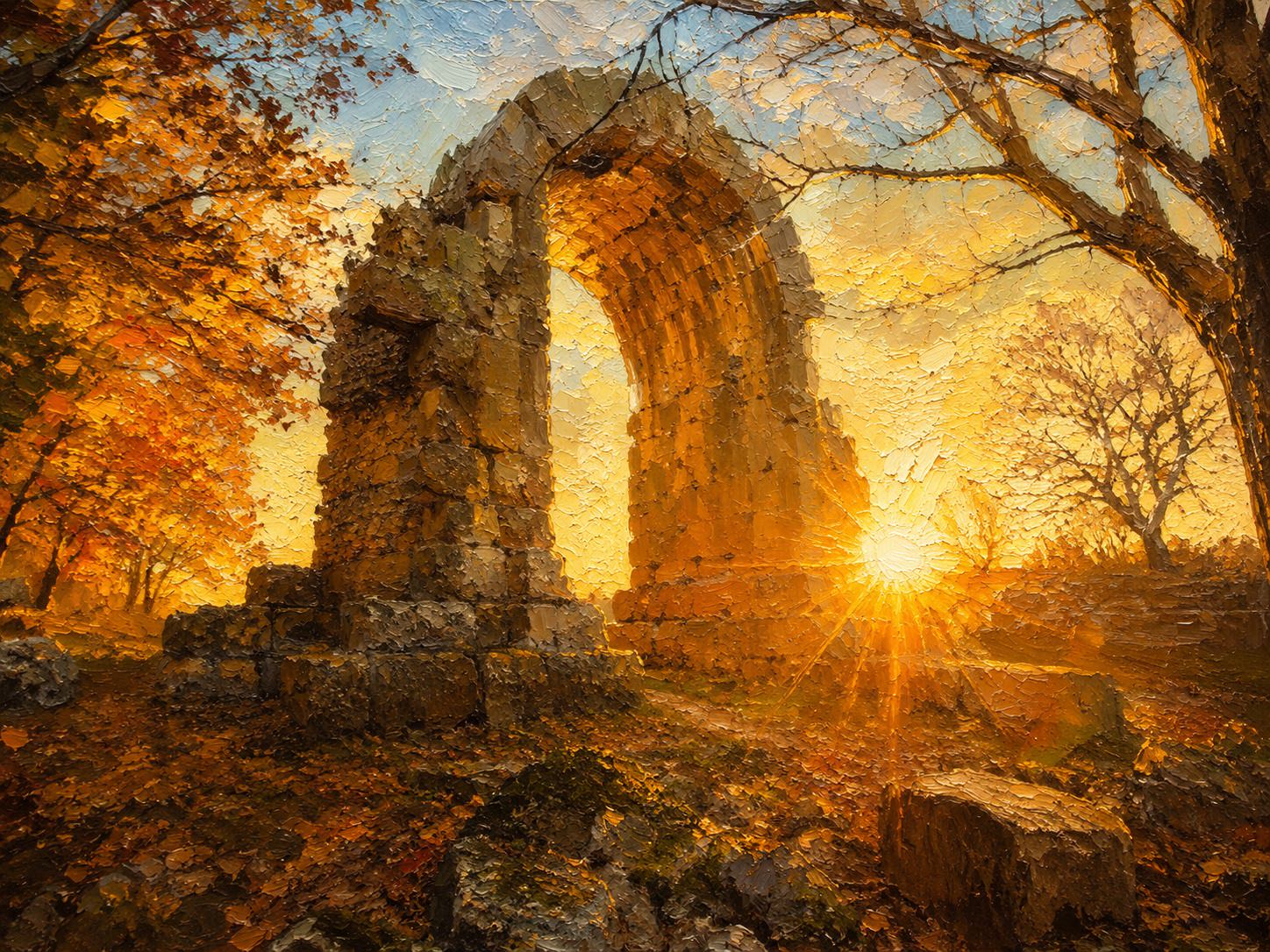
Thus the first nucleus of Carsulae became, shortly thereafter, a splendid Roman city. At the same time the cult area of Monte Torre Maggiore continued to have, even in Roman times, a leading role in the centrality of the religious rites of southern Umbria, so much so that a road of great importance known as Carre Sale, connected the two sites.
The Middle Ages
The first core of Cesi
The birth of Cesi, according to tradition and according to Contelori, had dope the "ruina di Carsulae", when the inhabitants took refuge in the nearby Casventum today San Gemini and Cesi. The historian writes that it is common opinion, but not suffragated by any document, that the first nucleus arose in Santa Maria de Fora near Montione and that this then moved to the current site.
Le Terre Arnolfe
The important story of Cesi begins with the Arnolphs. It is known that after 962 the Emperor Otto of Saxony, he defended this territory and entrusted it to his advisor, such Arnolfo. Since then the history of the Arnolfe Lands, of which were part of many fortified villages that had, in Cesi the main center, namely the "capital".
In a document of the 13th century it is read that the Pope even charged the Templars to govern Cesi who was "caput Terrae Amolphorum"
The powerful Rocca di Cesi on Mount Sant' Erasmo, was the seat of the castellano (rector) or governor, appointed by the Pope, and had jurisdiction over all Arnolfe Lands. Its strategic role was huge enough to be contested by Terni, Todi and Spoleto.
From the Middle Ages to the present day
The period of maximum splendor It was in the sixteenth and seventeenth centuries.
Cesi, despite the struggles between Papacy and the Empire, remains under the control of the Papal State and continues its role as "capital" of the Arnolfe Lands, a denomination that persists until the early 18th century.
In 1525 Pope Clement VII assigned the lordship of the place to Paolo Acquasparta who will build the beautiful palace that is still seen in the historical center. At the same time, the other noble palaces emerge.
Cesi, autonomous municipality
In 1861 the first municipal council of Cesi was formed. It will end in 1927 when the Province of Terni will be established which, having to expand the municipal territory by legislative decree, will incorporate Cesi and other 14 municipalities like Collescipoli, Collestatte and Piediluco, all become the seat of the Municipal Delegation.
Between history and legend: the massacre of the Umbrians in the caves of Cesi
Tito Livio speaks of a massacre of two thousand Umbrians forced by the Romans to find refuge in some caves, so says the historian, they discovered two accesses. Then they set fire to the mouth of the same by killing the warriors suffocated by smoke and fire. It was assumed that the caves were those of Cesi.
The research of speleologists is still ongoing. It is worth remembering, however, that there are numerous caves present in the mountain and that, in more than 2000 years, there have been collapses and transformations of the same ones that prevent to perlustrate them entirely.
The Statute of the Arnolfe Lands
The first Statute is issued in 1286.
Divided into 81 articles, it regulates different aspects of public life. With it he tried to give common rules and legal units to all centers of the Arnolfe Lands that had, until then, different administrations and customs.
Another Statute will be issued in 1515.

